

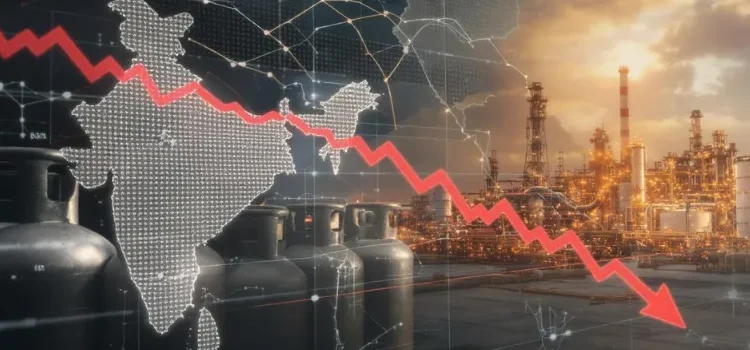

The 16% drop in India’s LPG demand during April is not just an energy sector event—it is a data-driven signal reflecting broader global economic shifts. The West Asia crisis has once again demonstrated how interconnected modern markets have become.
Data-Driven Understanding of Demand Patterns
Advanced analytics tools are now being used to monitor energy consumption in real time. The sudden decline in LPG demand highlights how quickly market behavior can change in response to geopolitical risks.
Supply Chain Disruptions and Predictive Analysis
Global supply chains are highly sensitive to disruptions. AI-driven forecasting models help companies predict:
- Supply shortages
- Price fluctuations
- Demand shifts
This allows businesses to respond proactively.
Digital Transformation in Energy Management
Technology is playing a key role in managing energy systems:
- Smart monitoring tools
- Automated logistics systems
- Digital procurement platforms
These innovations improve efficiency and reduce uncertainty.
Consumer Behavior and Market Intelligence
Data analytics also reveals changes in consumer behavior. Rising prices and uncertainty lead to:
- Reduced consumption
- Shift to alternatives
- Increased focus on efficiency
Strategic Business Adjustments
Organizations are adapting by:
- Optimizing operations
- Reducing costs
- Leveraging market insights
Sales and marketing strategies are also evolving to match new demand patterns.
Policy, Innovation, and Future Readiness
Governments and businesses are increasingly focusing on:
- Renewable energy
- Reduced import dependency
- Sustainable solutions
These steps aim to create a more stable and resilient energy ecosystem.
Conclusion
India’s LPG demand drop is a clear example of how global events, data insights, and technology intersect. Businesses that leverage analytics and adapt quickly will be better positioned in an unpredictable market.