

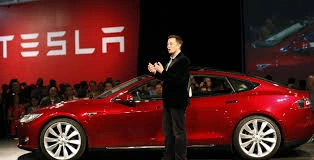

Most car companies market vehicles through performance, reliability, or price.
- Before Tesla, Electric Cars Felt Unimportant
- Tesla Turned Software Into the Center of the Driving Experience
- Elon Musk Became Part of the Product
- The Real Disruption Was Psychological
- Data Became a Hidden Competitive Advantage
- Manufacturing Still Became Tesla’s Biggest Challenge
- The Autonomous Driving Vision Changed Investor Expectations
- Tesla Also Changed Consumer Identity
- The Bigger Lesson Behind Tesla’s Rise
Tesla approached the industry completely differently.
It sold a vision of the future.
And that may be the biggest reason the company changed the global automotive market faster than almost anyone expected.
Before Tesla, Electric Cars Felt Unimportant
For years, electric vehicles were treated as niche products.
Most consumers associated them with:
limited range,
slow performance,
small designs,
and environmental idealism rather than excitement.
Traditional automakers largely assumed gasoline vehicles would continue dominating for decades.
Tesla challenged that assumption aggressively.
Instead of presenting electric vehicles as compromises, the company marketed them as superior technology products.
Fast acceleration.
Minimalist interiors.
Software-driven experiences.
Continuous updates.
Autonomous driving ambitions.
The car stopped feeling like a machine.
It started feeling like a connected device.
Tesla Turned Software Into the Center of the Driving Experience
One reason Tesla felt different from traditional automakers is because the company behaved more like a technology platform than a car manufacturer.
Software updates continuously improved vehicles after purchase.
Features evolved remotely.
Interfaces resembled consumer electronics more than traditional dashboards.
This changed customer expectations dramatically.
Drivers started expecting cars to behave more like smartphones:
connected,
updatable,
and constantly improving over time.
Traditional automakers suddenly looked technologically slow by comparison.
Elon Musk Became Part of the Product
Another unusual aspect of Tesla’s growth was branding.
Most automotive companies market through corporate identity.
Tesla’s public image became heavily connected to Elon Musk himself.
His online presence, ambitious predictions, controversies, and futuristic messaging created enormous attention continuously.
Supporters viewed him as visionary.
Critics viewed him as unpredictable.
But either way, attention stayed focused on Tesla constantly.
In modern internet culture, attention itself became one of the company’s strongest marketing advantages.
The Real Disruption Was Psychological
Tesla’s biggest achievement was not simply building electric cars.
It forced the entire automotive industry to take electric vehicles seriously.
Once Tesla proved consumers would pay premium prices for EVs at scale, traditional manufacturers had no choice but to accelerate their own transition plans.
Companies that previously moved cautiously suddenly announced:
massive EV investments,
battery initiatives,
charging infrastructure plans,
and software-focused vehicle strategies.
Tesla changed industry psychology faster than production numbers alone explain.
Data Became a Hidden Competitive Advantage
Modern Tesla vehicles generate enormous amounts of operational data.
Driving behavior,
battery performance,
road conditions,
autonomous system feedback,
and vehicle diagnostics continuously feed into broader software systems.
This data became strategically valuable for improving:
self-driving technology,
energy optimization,
and software performance.
In many ways, Tesla vehicles operate partly like connected computing devices collecting real-world behavioral information at scale.
That creates advantages traditional automakers historically never prioritized.
Manufacturing Still Became Tesla’s Biggest Challenge
Despite the technology narrative, Tesla eventually faced a reality every automotive company encounters:
manufacturing complexity.
Building cars at global scale is extremely difficult.
Supply chains,
battery production,
factory efficiency,
logistics,
quality control,
and regulatory compliance all become massive operational challenges.
This is where many technology-style assumptions collide with industrial reality.
Cars are not purely software products.
They are also heavy manufacturing systems.
Tesla’s growth forced the company to evolve from a disruptive startup into a large-scale industrial operator surprisingly quickly.
The Autonomous Driving Vision Changed Investor Expectations
Tesla’s long-term value became heavily tied to autonomous driving expectations.
Investors increasingly viewed the company not only as a car manufacturer, but as a future AI and robotics platform potentially capable of transforming transportation itself.
This dramatically influenced market perception.
Traditional automakers were valued largely around vehicle sales.
Tesla became valued partly around future technological possibilities.
That distinction explains much of the company’s unusual position in financial markets.
Tesla Also Changed Consumer Identity
Owning a Tesla became symbolic for many consumers.
For some, it represented:
innovation,
modernity,
environmental awareness,
or participation in future technology trends.
The company built emotional identity around its products in ways uncommon for automotive brands outside luxury markets.
And emotional branding creates unusually strong consumer loyalty.
The Bigger Lesson Behind Tesla’s Rise
Tesla’s success reveals something important about modern technology markets:
The companies reshaping industries are often not just selling products.
They are selling narratives powerful enough to change consumer behavior, investor belief, and industry direction simultaneously.
Tesla sold the idea that the future would be:
electric,
software-driven,
connected,
and increasingly autonomous.
Once enough people believed that future was inevitable, the rest of the automotive industry had to start moving toward it too.
And that may have been Tesla’s real disruption all along.