


By using this site, you agree to the Privacy Policy and Terms of Use.
Accept
Martechtalks
  • Home
  • Blogs
  • Whitepapers
  • About Us
  • Contact
  • Home
  • Blogs
  • Whitepapers
  • About Us
  • Contact
Register
Font ResizerAa
MartechtalksMartechtalks
  • Information Technology
  • Information Technology
  • Marketing
  • Sales
  • Blogs
Search
  • Categories
    • Sales
    • Marketing
    • Information Technology
    • Featured
  • More
    • Blogs
Have an existing account? Sign In
Follow US
Reports

India’s LPG Demand Decline Signals Deeper Impact of Global Energy Tensions

Wpittrendswire
Last updated: May 8, 2026 6:13 pm
Wpittrendswire
Published: April 20, 2026
Share
SHARE

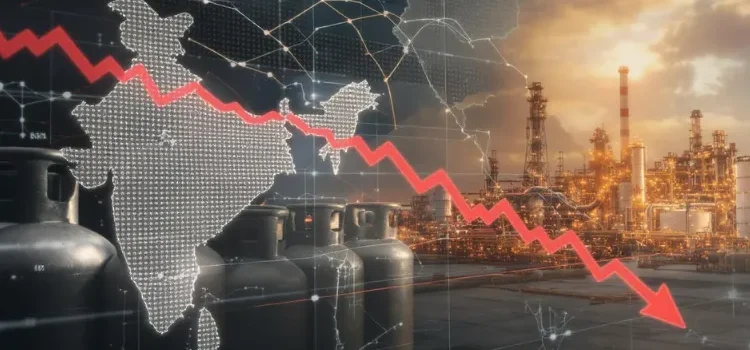
India’s LPG demand witnessed a sharp 16% drop in April, highlighting how global geopolitical tensions—particularly in West Asia—can significantly influence domestic energy consumption patterns. While seasonal variations are common, this sudden decline points toward deeper structural and economic shifts.

Contents
  • Beyond Seasonal Trends: What Caused the Decline
  • Global Geopolitics and Energy Dependency
  • Market Behavior and Economic Indicators
  • Impact on Households and Businesses
  • Industry Adaptation and Strategic Response
  • Government Role in Stabilization
  • Conclusion

Beyond Seasonal Trends: What Caused the Decline

April typically marks a transitional period in LPG usage due to changing weather conditions. However, this year’s decline cannot be explained by seasonality alone.

The ongoing West Asia crisis has disrupted global energy supply chains, leading to uncertainty in pricing and availability. As a result, both consumers and distributors have adopted a cautious approach, reducing overall demand.

Global Geopolitics and Energy Dependency

India relies heavily on LPG imports, with a significant portion sourced from West Asia. Any instability in this region directly affects supply flows and pricing structures.

Geopolitical tensions create ripple effects across global markets, forcing importers to adjust procurement strategies. Delays, cost fluctuations, and supply risks all contribute to reduced consumption levels.

Market Behavior and Economic Indicators

The drop in LPG demand also reflects changing market behavior. Businesses are becoming more responsive to global developments, adjusting operations based on cost pressures.

Energy consumption is often seen as a key economic indicator. A decline suggests cautious spending, operational adjustments, and a broader shift in economic activity.

Impact on Households and Businesses

For households, LPG is a primary cooking fuel. Price increases or supply uncertainty often lead to reduced usage or a shift toward alternative energy sources.

In commercial sectors such as hospitality and small businesses, energy costs directly affect profitability. As uncertainty rises, organizations focus on efficiency and cost control.

Industry Adaptation and Strategic Response

Energy companies are actively responding to these challenges by:

  • Diversifying supply sources
  • Improving storage infrastructure
  • Implementing flexible pricing strategies

These measures aim to build resilience against future disruptions.

Government Role in Stabilization

Policy intervention plays a crucial role in managing energy volatility. Governments may use:

  • Strategic reserves
  • Subsidies
  • Regulatory adjustments

Additionally, long-term initiatives such as renewable energy adoption are being explored to reduce dependency on imports.

Conclusion

The decline in LPG demand is more than a temporary fluctuation. It reflects the interconnected nature of global energy systems and domestic markets. Moving forward, adaptability, strategic planning, and diversification will be key to ensuring stability.

An Interesting Way to Drive More Sales and Boost Conversions for Growth
Silicon Valley’s New Obsession Isn’t Innovation Anymore — It’s Survival
Leading Through Hiring Freezes: How Smart Communication Keeps Teams Confident
The Real Reason Young People No Longer Trust Traditional Corporate Careers
Most Dangerous Problem in AI Isn’t Fake Images — It’s Fake Confidence
TAGGED:BusinessResearch
Share This Article
Facebook Email Print
Leave a Comment

Leave a Reply Cancel reply

Your email address will not be published. Required fields are marked *

Recipe Rating


Follow US

Find US on Social Medias
FacebookLike
XFollow
YoutubeSubscribe
TelegramFollow

Weekly Newsletter

Subscribe to our newsletter to get our newest articles instantly!
Email_Newsletter
Popular News
Whitepapers

Demystifying compliance with legal regulations

Martechtalks
Martechtalks
June 20, 2025
TikTok Marketing in 2026: Strategies Brands Must Know
Why AI-Driven Cybersecurity Is Becoming a Business Necessity
Lenovo’s Sphere of Influence Brings Vision Back to CES
Transform Your IT for What’s Next
- Advertisement -
Ad imageAd image

Categories

  • Cyber -Security
  • Technology
  • Sales
  • Marketing
  • AI
  • SaaS

About US

We share the latest insights on business, technology, and digital trends in a simple and easy-to-understand way.
Quick Link
  • Privacy Policy
  • GDPR
  • CCPA
  • Terms of Use
  • Manage Cookies
Top Categories
  • Home
  • Blogs
  • Contact Us
  • unsubscribe
  • Do Not Sell My Personal Info

Subscribe US

Subscribe to our newsletter to get our newest articles instantly!

Email_Newsletter

© 2026 MartechTalks. All Rights Reserved.
Join Us!
Subscribe to our newsletter and never miss our latest news, podcasts etc..
Email_Newsletter
Zero spam, Unsubscribe at any time.
Welcome Back!

Sign in to your account

Username or Email Address
Password

Lost your password?

