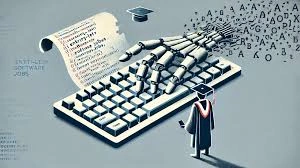

For years, software development looked like one of the safest careers in the modern economy.
- Companies Need Fewer Junior Developers Than Before
- Coding Is Becoming More About Problem-Solving Than Syntax
- The Productivity Gap Between Developers Is Expanding
- Startups Are Scaling With Smaller Engineering Teams
- AI Still Makes Serious Mistakes
- The Industry Is Quietly Rewriting Hiring Expectations
- Open-Source Culture Is Also Changing
- The Best Developers May Become Even More Valuable
- The Industry Isn’t Dying — It’s Restructuring
Companies desperately needed developers.
Salaries kept rising.
Bootcamps exploded in popularity.
Students rushed into computer science programs believing coding guaranteed long-term stability.
Then AI coding tools arrived.
At first, many developers dismissed them as weak autocomplete systems useful only for basic tasks. But the improvement happened incredibly fast.
Now the conversation inside the industry feels very different.
Because the biggest change is not that AI can suddenly replace every programmer.
It is that the economics of software development are beginning to change.
Companies Need Fewer Junior Developers Than Before
One of the first places AI is reshaping the industry is entry-level work.
Junior developers traditionally handled:
boilerplate code,
documentation,
debugging assistance,
simple feature implementation,
and repetitive development tasks.
AI tools now automate large portions of that work surprisingly well.
A skilled developer using modern AI systems can often complete tasks much faster than before, reducing the need for large junior-heavy teams in some environments.
This creates a difficult situation for new developers entering the industry.
The traditional learning ladder is shifting underneath them.
Coding Is Becoming More About Problem-Solving Than Syntax
For years, programming education focused heavily on memorization:
frameworks,
syntax,
language rules,
and implementation patterns.
AI changes the value of those skills.
When code generation becomes partially automated, the more valuable abilities become:
system design,
architecture thinking,
debugging judgment,
business understanding,
security awareness,
and problem decomposition.
In other words, knowing what to build and why increasingly matters more than manually typing every line yourself.
The role of developers is slowly evolving from code producers into technical decision-makers.
The Productivity Gap Between Developers Is Expanding
AI tools do not affect all developers equally.
Experienced engineers usually benefit far more because they understand:
how to guide AI outputs,
spot mistakes,
review architecture decisions,
and integrate generated code safely.
Less experienced developers sometimes struggle because they rely too heavily on generated answers without fully understanding the underlying systems.
This creates a widening productivity gap inside teams.
A highly skilled engineer equipped with AI tools can now operate with output levels that previously required multiple developers.
That changes hiring strategy significantly.
Startups Are Scaling With Smaller Engineering Teams
One reason AI startup growth feels unusually fast right now is because development efficiency increased dramatically.
Small teams can now:
prototype faster,
debug quicker,
generate interfaces rapidly,
write documentation automatically,
and automate large parts of development workflows.
Some startups reaching millions of users today operate with engineering teams far smaller than companies needed even five years ago.
That shift affects labor demand across the industry.
Businesses still need engineers.
But they increasingly prioritize highly adaptable developers capable of operating effectively alongside AI systems.
AI Still Makes Serious Mistakes
Despite the hype, AI-generated code is far from perfect.
It can:
introduce security vulnerabilities,
generate inefficient architecture,
misunderstand business logic,
or produce confidently incorrect implementations.
This is why experienced oversight still matters heavily.
Companies deploying production systems cannot blindly trust generated outputs without human review, especially in:
finance,
healthcare,
cybersecurity,
infrastructure,
and enterprise software environments.
The current reality is not full automation.
It is accelerated development with human supervision.
The Industry Is Quietly Rewriting Hiring Expectations
Many companies are no longer evaluating developers exactly the same way.
The ability to:
learn quickly,
adapt to new tools,
work with AI systems,
and understand broader product thinking is becoming increasingly important.
Pure coding speed matters less when AI can generate large amounts of syntax automatically.
This shift may eventually reshape technical education itself.
Memorization-heavy learning models become less valuable when intelligent systems can assist with implementation instantly.
Open-Source Culture Is Also Changing
AI coding assistants trained partly on public repositories created tension across the developer ecosystem.
Some programmers worry about:
ownership,
licensing,
code attribution,
and whether AI systems unfairly benefit from open-source contributions.
At the same time, AI tools are helping more people build software without traditional engineering backgrounds.
This creates a strange contradiction:
coding becomes more accessible while professional software engineering becomes more competitive.
The Best Developers May Become Even More Valuable
Ironically, AI may increase the importance of elite engineering talent rather than eliminate it completely.
As routine coding becomes easier, companies may place even greater value on developers capable of:
building scalable systems,
making architectural decisions,
handling complex infrastructure,
and solving high-level technical problems.
Average coding tasks become cheaper.
Exceptional technical judgment becomes more valuable.
The Industry Isn’t Dying — It’s Restructuring
Software engineering is not disappearing.
But it is transforming rapidly.
The future developer may spend less time manually writing repetitive code and more time:
reviewing AI outputs,
designing systems,
solving business problems,
and orchestrating intelligent tools.
That changes what being a “programmer” actually means.
And the developers adapting fastest to this transition may define the next generation of the technology industry itself.