

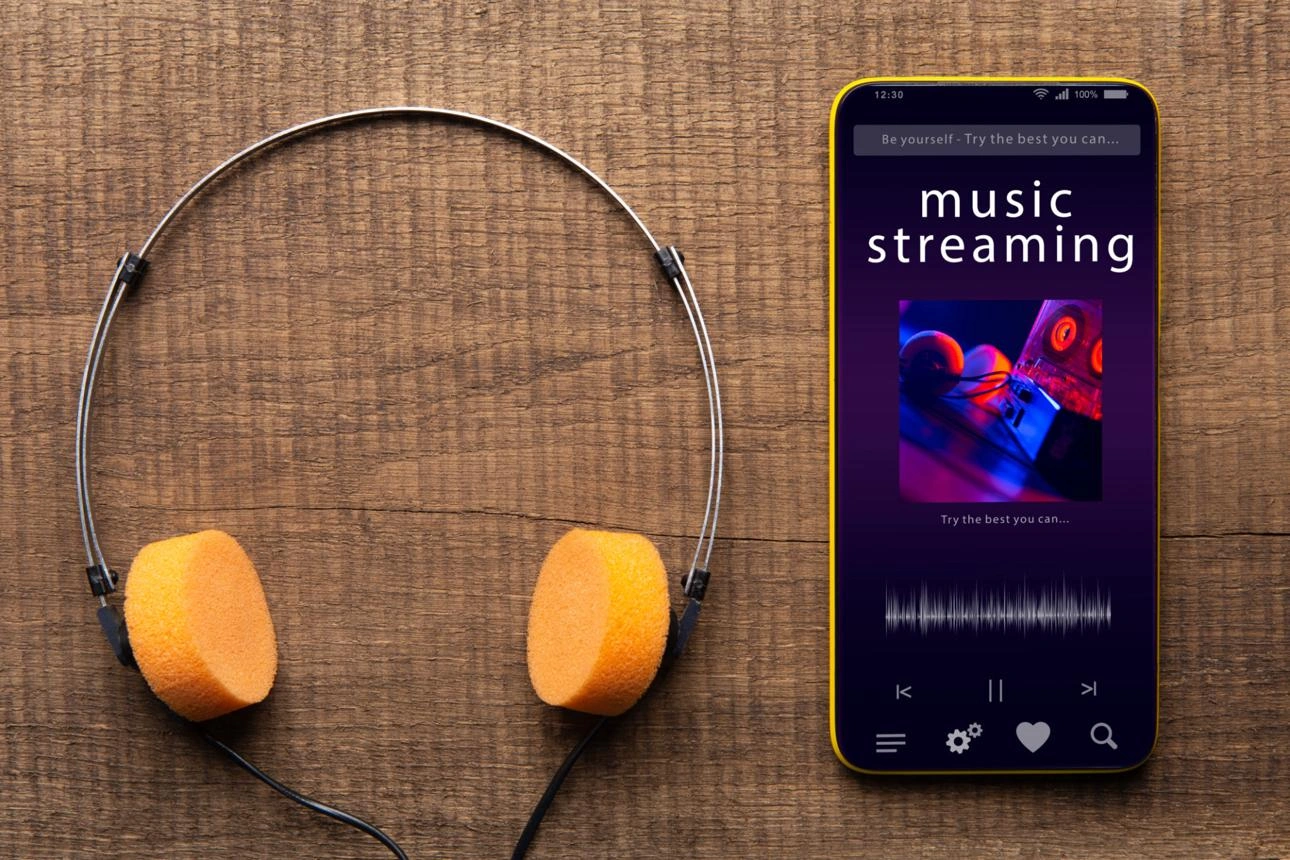

Before music streaming became dominant, listening to music felt more intentional.
- Infinite Content Changed Listening Behavior
- Algorithms Became Better Than Human Curation
- Background Consumption Became Normal
- The Subscription Model Rewired Consumer Habits
- Artists Gained Reach but Lost Control
- Spotify Became a Data Company Disguised as a Music App
- Modern Attention Is Increasingly Algorithmic
- Spotify’s Biggest Impact Was Psychological
People bought albums.
Downloaded songs individually.
Organized playlists manually.
Repeated favorite tracks for months.
Music consumption had limits.
Then platforms like Spotify changed the experience completely — and in the process, they quietly changed human attention patterns far beyond the music industry itself.
Infinite Content Changed Listening Behavior
Spotify removed friction almost entirely.
Suddenly, millions of songs became instantly available from anywhere. Users no longer needed to search deeply or commit to albums. Music became continuous, personalized, and always accessible.
That convenience altered listening habits quickly.
Instead of consuming music slowly, people started skipping faster, exploring constantly, and moving rapidly between moods, genres, and recommendations.
The platform trained users to expect endless discovery.
And once people adapt to infinite content environments, their behavior changes across other digital experiences too.
Algorithms Became Better Than Human Curation
One of Spotify’s biggest breakthroughs was recommendation systems.
The platform learned:
what users replayed,
what they skipped,
when they listened,
which genres they preferred,
and how mood influenced behavior.
Over time, the algorithm became surprisingly effective at predicting what people might enjoy next.
This changed the role of human choice online.
Instead of actively deciding what to hear, users increasingly allowed algorithms to guide discovery automatically.
That model eventually spread across the internet:
social media feeds,
video platforms,
shopping recommendations,
news distribution,
and AI content systems all evolved around similar behavioral prediction principles.
Background Consumption Became Normal
Streaming platforms also changed how people interact with attention itself.
Music became constant background infrastructure:
during work,
exercise,
studying,
travel,
gaming,
and even sleep.
Silence became less common.
People increasingly filled every idle moment with digital input.
This shift may seem small, but it reflects a larger transformation in modern internet culture:
continuous stimulation became normalized.
And businesses quickly adapted around that behavior.
The Subscription Model Rewired Consumer Habits
Spotify helped strengthen another major internet trend:
subscription-based access instead of ownership.
Users stopped collecting music files permanently.
Instead, they paid for continuous access.
That psychological transition influenced the broader digital economy heavily.
Today consumers subscribe to:
movies,
software,
cloud storage,
AI tools,
newsletters,
fitness platforms,
and productivity apps.
The internet shifted from ownership culture toward access culture.
And recurring subscriptions became one of the most powerful business models in technology.
Artists Gained Reach but Lost Control
Streaming transformed the music industry economically as well.
Independent artists gained global distribution opportunities that previously required major labels or expensive infrastructure.
But streaming also changed incentives.
Platforms optimized heavily around:
engagement,
repeat listening,
viral discovery,
and playlist inclusion.
As a result, artists increasingly create music designed to perform well inside algorithmic systems rather than traditional album experiences.
Songs became shorter.
Hooks arrived faster.
Attention retention became commercially important.
The algorithm quietly influenced creativity itself.
Spotify Became a Data Company Disguised as a Music App
At its core, Spotify operates heavily through behavioral analysis.
The platform continuously studies emotional patterns, listening habits, time-of-day behavior, and user engagement.
That data helps optimize personalization, retention, advertising, and recommendation systems.
In many ways, Spotify resembles broader technology companies more than traditional entertainment businesses.
It is part of the larger internet shift where user behavior itself becomes one of the most valuable business assets.
Modern Attention Is Increasingly Algorithmic
One of the most important long-term effects of streaming culture is that people now expect personalized experiences everywhere online.
Users want systems that automatically understand preferences without requiring effort.
That expectation influences:
shopping,
social media,
news,
video,
AI assistants,
and digital products across industries.
Algorithms increasingly shape what people discover, consume, and prioritize online.
And many users barely notice how much these systems influence daily behavior.
Spotify’s Biggest Impact Was Psychological
The platform did more than modernize music distribution.
It normalized a broader digital experience:
frictionless, personalized, infinite consumption powered by algorithms.
That model now defines much of the modern internet.
And while it created extraordinary convenience, it also contributed to an environment where attention constantly shifts, content never ends, and silence becomes increasingly rare.
Spotify changed music.
But more importantly, it helped shape the psychology of how people interact with digital life itself.